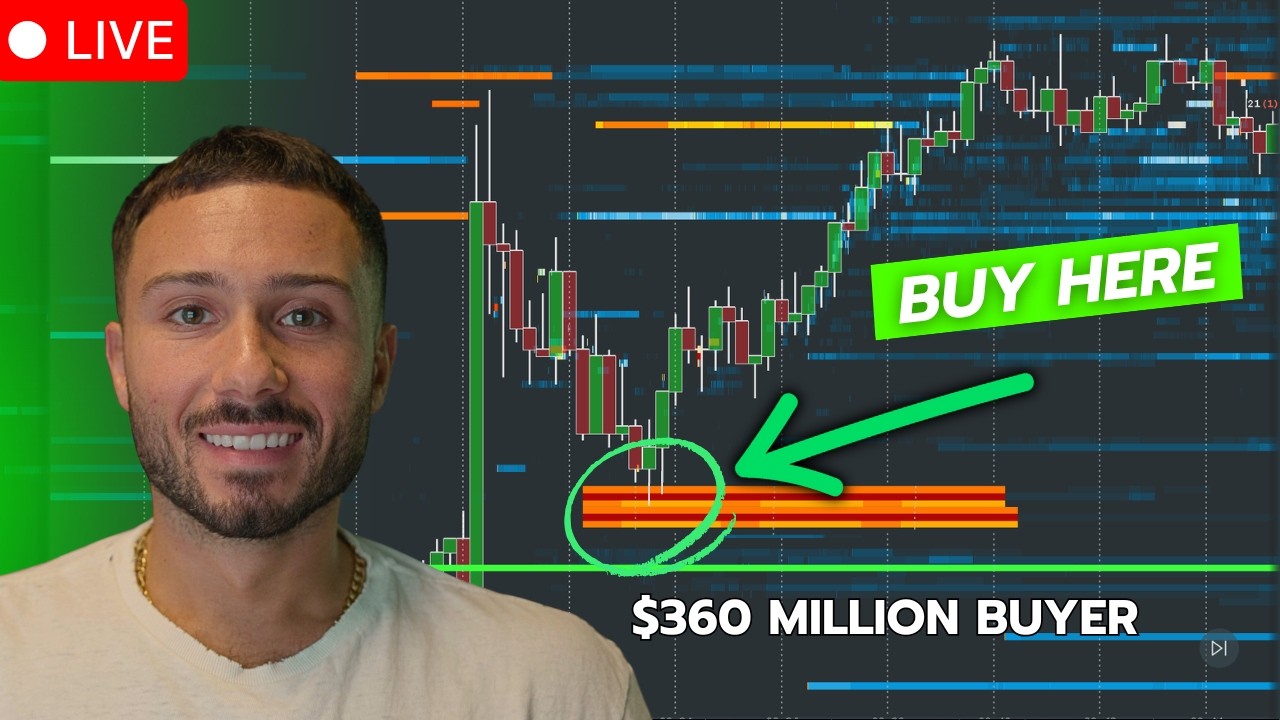
Most zero-days-to-expiration (0DTE) traders pick a side and stay there: they either sell premium every day and collect theta, or they buy cheap lottery tickets and wait for the big day. In this Theta Profits interview, options trader Jason Ruchel argues for doing both — but on a schedule set by the options market itself. Roughly two-thirds of the time he is a premium seller, because implied volatility usually overstates the move that actually happens. The rest of the time the market is pricing in too little, and he flips to buying. The video walks through how he tells the two apart each morning, and the two fully specified SPX strategies he uses on each side.
Start with what the market is pricing in
Ruchel’s routine begins before the week does. After Friday’s close he notes the full-week expected move from the SPX options chain — around 100 points in his example — and then watches how quickly it gets used up. In that week more than half of it was gone by Monday and all of it by Tuesday morning, which tells you a lot about how the rest of the week is likely to be priced. He layers the calendar on top: is it monthly options-expiration week, the first or last day of a month or quarter, a Fed week, a jobs report, earnings season? Knowing what risk is scheduled, and how the options market is pricing it, comes before any trade idea.
The dials: VIX, VIX1D and gamma
Three readings decide whether the day is a selling day or a buying day:
- VIX and the rule of 16. A VIX of 16 implies roughly a 1% daily move in the S&P 500, so he treats it as a line in the sand. Below it, the market is pricing a normal tape. Above 16–18 he does not want to be buying premium — that is selling territory — and above 20 he gets cautious with intraday strategies altogether. For selling he prefers an IV percentile above 25–30, and a VIX that opens higher on the day.
- VIX1D. The one-day VIX prices options expiring within a day, so it is the most direct gauge for 0DTE. It tends to sit under 10 in quiet markets; he likes it above 10–15 to sell, and below about 7–8 he avoids selling. A related sanity check: SPX typically moves 25–30 points a day, so if the day’s implied move is under 20–25 points, a single headline can blow through it and the seller is not being paid for the risk.
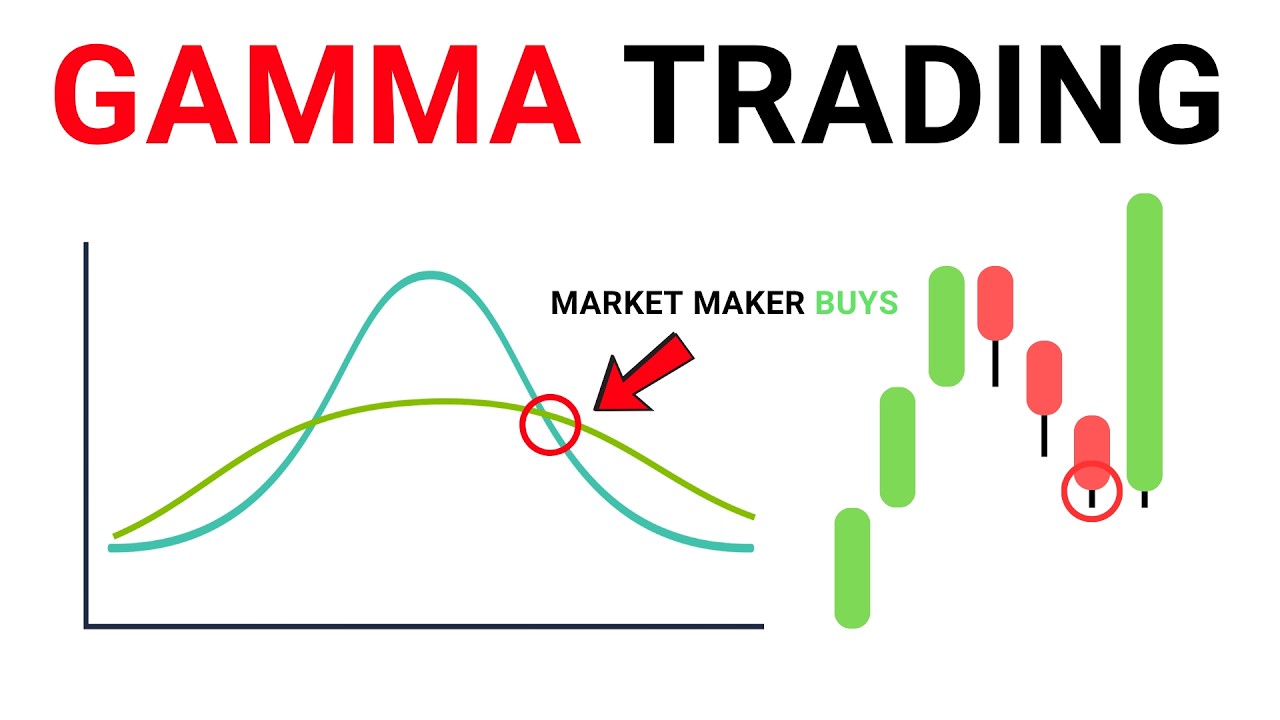
- The gamma regime. In positive gamma, dealer hedging leans against moves and keeps price contained — good for sellers. In negative gamma, hedging chases price and moves run more freely through levels — good for buyers. (We cover the mechanics in How gamma and dealer hedging move the market, and publish daily levels on our GEX Levels page.)
Time matters as much as level. The first two hours, until European markets close, are where the big moves usually happen; after that, buyers and sellers tend to agree on a range and the afternoon chops sideways. So his rhythm is to buy premium early in the day and sell it late — and, across the week, to lean towards selling early in the week and buying on Wednesday to Friday, when the event risk tends to cluster.
Strategy 1: the 1:45 trade (short iron fly)
The selling strategy takes only the last two hours or so of the session, after the morning’s big moves are done. Instead of a wide iron condor that needs thousands in buying power, it is a narrow, near-the-money structure that behaves like a butterfly and risks about as much as it collects.
- Entry: 1:45 PM Eastern on SPX.
- Structure: sell the strike closest to a 50-delta put and a 40-delta call — a slight bullish tilt — and buy wings 15 points beyond each short. Smaller accounts can use 10-point wings.
- Risk and reward: roughly $7.50 of credit on a 15-wide fly (about $5 on a 10-wide), so close to 1:1. Maximum loss is the wing width minus the credit, under $1,000 per lot.
- Filters: VIX below 20, ideally around 15–16. Trade Monday, Tuesday, Thursday and Friday; Monday and Friday backtest best, which he puts down to weekend hedging flows. Never Wednesday — Fed days spoil the results.
- Exit: no stop and no adjustments — risk is capped by the wings, so it is a “put it on and let it play out” trade. About two-thirds of the time he lets it cash-settle; if 50% of the maximum profit arrives early, say with an hour still to go, he takes it.
Over two years of one-lot backtests the trade ran 299 times with a 57% win rate, an average winner of $513 against an average loser of $492 — the edge comes from winning slightly more often than losing, not from an outsized payoff. He has run it automated in Option Omega across several accounts since spring 2026 and says it has held up through a summer in which multi-entry iron condors were stopped out more often. Because last-hour gamma can swing the P&L hard, he keeps it to one or two contracts.
When to stop selling
The case for buying starts from the observation that the volatility risk premium has been thinner this year than in most years since daily SPX expirations arrived in 2022. Comparing the 9:45 at-the-money straddle with the actual open-to-close move, he finds days — a quarter-end, a strong Monday gap — where the realised move beat the implied one. You cannot know that in advance, but the conditions that precede it are visible: a low VIX and VIX1D, a small implied move, a negative-gamma regime, and an audience that has grown too comfortable expecting nothing to happen.
Strategy 2: the morning long iron condor
The buying strategy is a reverse iron condor, which makes money on a big move in either direction without having to call it. The trigger is the VIX itself: if volatility is being sold off from the open, a trending day is more likely.
- Trigger: the VIX gaps down at the open (by any amount), then falls at least another 0.5% — 1% is better — from the open.
- Window: the trigger must fire by 11:00 AM Eastern, or there is no trade that day.
- Days: any day except Monday, when the VIX usually rises after the weekend. Thursdays and event days have worked best.
- Structure: buy a 30-point-wide put spread priced near $6 and a 30-point-wide call spread priced near $3. The call side is cheaper on purpose: in his backtests upside moves tend to run longer during the day. Total debit is about $9 for a maximum payoff near $30.
- Exit: hold to the close, or take 100–125% if it arrives early — often before London closes at 11:30. No stop and no adjustments; the debit is the risk, sized at about 2% of the portfolio. If you feel the need to manage the loss, the position is too big.
The backtest covers 338 trades over more than four years. It wins a little under half the time, as long-premium strategies usually do, but the average winner (around $1,400 per lot) is roughly double the average loser (around $740), for an annual return near 37%. Its worst stretch was the quiet summer of 2026, when single stocks did the moving and the index stayed pinned. Smaller accounts can trade the same idea on XSP, which is a tenth the size of SPX and also cash-settled, or simply buy a long strangle there. SPY works too, but it is not cash-settled, so the position must be closed before the bell.
Running both
The two strategies do not compete for the same part of the day: the long condor goes on in the morning and the iron fly after 1:45, so both can be live on the same day, and the afternoon fly can offset a morning condor that never got its move. Ruchel also uses the long condor as a cheap intraday hedge for a book of longer-dated single-stock and index positions, since it pays on a sharp drop as well as a rally. He rates both around 2–3 on a 1–10 risk scale — not because 0DTE gamma is gentle, but because the worst case is fixed the moment the trade is placed.
The main takeaway is less about the specific strikes than the habit behind them: let implied volatility decide whether today is a selling day or a buying day, write the rules down so they can be backtested and automated, and keep the risk defined either way.
This is a summary for readers deciding whether to watch, and nothing here is financial advice. The strategies and backtest figures are presented from the trader’s own experience and tools, not as independently verified edges — treat them as hypotheses to test, not recipes to follow. 0DTE options can lose their full value within hours.
Summary of the video “Stop Selling 0DTE Options Every Day. Do This Instead.” by Theta Profits, an interview with Jason Ruchel. Watch the full interview above for the risk graphs and backtest results.